

A watch spends hours against your skin, so material matters long after you decide whether you like the dial. The wood vs. stainless steel watch choice affects weight, temperature, wear, upkeep, and how the watch changes with age. Get that choice wrong, and even a good-looking watch may spend more time in a drawer than on your wrist.
Treehut offers both approaches, including designs that bring wood and steel together. Stainless steel watches bring their own practical advantages, while wooden watches offer distinct differences in weight, feel, and appearance. Here is how to choose based on what you will notice in actual use.
Quick answer: Choose a wooden watch if you prefer lower weight, natural grain, and a less pronounced temperature change against your skin. Choose stainless steel if you want greater impact resistance, easier maintenance, and a more substantial feel. A mixed-material watch can offer characteristics of both.
Wood Watch vs. Metal Watch: Key Differences at a Glance
When comparing a wood watch vs. metal watch, the most noticeable differences involve weight, wrist feel, impact resistance, appearance, and upkeep.
|
Factor |
Wood Watch |
Stainless Steel Watch |
|
Weight |
Usually lighter |
Usually heavier |
|
Temperature on the wrist |
Less responsive to temperature changes |
Can feel cool or warm at first contact |
|
Appearance |
Natural grain and color vary from piece to piece |
More consistent within the same finish |
|
Impact resistance |
More vulnerable to hard knocks |
Better resistance to frequent physical contact |
|
Moisture exposure |
Requires more caution around prolonged exposure |
The metal itself resists moisture and corrosion |
|
Surface wear |
Grain can make some minor marks less noticeable |
Scratches may show clearly on polished surfaces |
|
Maintenance |
Requires material-specific care |
Generally simpler to clean and maintain |
What Makes a Wood Watch Different?

One difference becomes immediately clear in a wood vs. stainless steel watch comparison: wood retains the grain, color shifts, and figuring of the material it came from. Even components cut from the same species will not match exactly, so variation becomes part of the finished watch.
A wooden watch is not necessarily made entirely from wood. Depending on the model, wood may appear in the dial, bezel, case, bracelet, or decorative inlays, with metal used for structural components, hardware, or the case interior.
The species influences more than color. They also vary in density, hardness, and grain structure. These characteristics can influence the durability of wooden watches and how the finished components behave over time.
Grain itself forms as a tree grows rather than during watch production. As a result, the section of wood selected for a dial, bezel, case, or bracelet influences the lines and color visible on the finished component. Watchmakers have to work with those existing characteristics instead of creating a completely uniform surface.
This makes wood unusual as a watchmaking material: part of the final design already exists before shaping begins. When choosing a wooden watch, it therefore makes sense to look beyond the model itself and consider the wood species and individual grain pattern too.
Stainless Steel Watch Benefits: Where Metal Stands Out

In a wood vs. stainless steel watch comparison, steel brings a different set of physical properties. Its strength, corrosion resistance, consistency, and ability to take different finishes help explain its widespread use in watch cases and bracelets.
- High structural strength: Stainless steel provides considerable strength and rigidity for its size. Watchmakers can use it for cases, bracelet links, clasps, and other components that need to hold their shape through regular wear.
- Corrosion resistance: Stainless steel contains chromium, which helps form a thin protective layer on its surface. This layer helps the underlying metal resist rust and corrosion from ordinary exposure to sweat and humidity.
- Consistent material properties: Standardized stainless steel grades give watchmakers a predictable material to work with. That consistency helps them produce precisely fitted cases, links, clasps, and other components.
- A wide range of finishes: Stainless steel responds well to brushing, polishing, bead blasting, and coatings. Watchmakers can also combine finishes on the same case or bracelet, creating contrast between different surfaces.
-
Long service potential: Stainless steel retains its structural properties well under normal watch-wearing conditions. Still, the lifespan of the complete watch also depends on its movement, construction, and other components.
Wood brings natural variation to watchmaking, while stainless steel gives manufacturers greater material consistency and control. How those differences translate to weight and wrist feel, however, becomes clearer once you actually wear the watch.
Comfort and Weight: Which Feels Better on the Wrist?
Weight is one of the clearest physical differences in a wood vs. stainless steel watch comparison. Wood generally weighs less than steel, although case size, movement, bracelet construction, and strap material can narrow or widen the difference.
That lower weight can become more noticeable when you wear a watch throughout the day. Some people prefer barely noticing a watch on their wrist, while others like the more substantial feel of a steel case and bracelet. Neither is inherently more comfortable; preference plays a large role.
Temperature affects wrist feel as well. Steel conducts heat efficiently, so it responds quickly to its surroundings. A metal bracelet can feel cold when you first put it on in winter or warm after sitting in the sun. Wood transfers heat more slowly, so the initial temperature change against your skin tends to feel less pronounced.
Material alone does not determine comfort, though. Case diameter and thickness affect how a watch sits on the wrist, while bracelet adjustment and strap flexibility affect movement and pressure. A well-fitted steel watch can easily feel better than a lighter wooden watch that fits poorly.
Style and Design: How Wood and Steel Change the Look
Style in a wood vs. stainless steel watch comparison depends on more than whether the case comes from a tree or a steel alloy. Proportions, dial layout, color, strap choice, and the amount of each material on display can make watches built from the same base material look remarkably different.
With stainless steel, designers can make the case shape and dial architecture the main visual focus. A slim case with a simple three-hand dial reads very differently from a larger chronograph with multiple subdials, even when both use the same metal. Bracelet and strap choices can shift the overall look further.
Wood introduces another design variable because its grain remains visible. Designers can use it across the case and bracelet or limit it to smaller areas, such as the dial, bezel, or inlay. The amount of exposed wood can change the watch more dramatically than the simple label “wooden watch” suggests.
Color combinations matter too. Dark wood paired with black metal creates less contrast, while lighter wood against silver-toned steel makes the boundary between materials much clearer. Leather straps, metal bracelets, and wood-link bracelets can each push the same case design in a different direction.
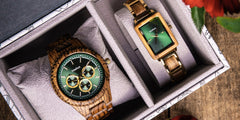
Mixed-material construction expands those possibilities further. Steel can define the case and hardware while wood adds pattern and color in selected areas. Rather than treating wood and metal as two fixed styles, it makes more sense to look at how much of each material the design uses – and what surrounds it.
Are Wooden Watches Durable? Water Resistance and Everyday Care
A wood vs. stainless steel watch comparison needs to separate three issues that shoppers often bundle together: material durability, water resistance, and maintenance. They are related, but each affects everyday ownership differently.
- Expect steel to handle impacts better. Stainless steel generally tolerates knocks and contact with hard surfaces better than wood. A sufficiently hard impact can dent, chip, or crack a wooden component, while steel is more likely to retain its structure.
- Treat water resistance as a specification of the complete watch. Whether a stainless steel watch is waterproof depends on more than the case material. Case construction, seals, the crown, and the manufacturer's stated water-resistance rating determine how much water exposure a watch can handle.
- Be more cautious with prolonged moisture around wood. Properly finished wooden components can handle ordinary wear, but repeated soaking can affect a natural material over time. Check the care instructions for the specific watch rather than assuming every wooden model handles moisture the same way.
- Expect visible wear from both materials. Polished steel can show fine scratches, while brushed surfaces may make some marks less noticeable. Wood can also pick up scratches and dents, although its grain may make minor surface marks less obvious.
- Use simple cleaning methods. A soft, dry or manufacturer-approved cloth is usually enough for routine surface cleaning. Avoid harsh household cleaners or abrasive materials unless the watchmaker specifically recommends them for that model.
- Store the watch separately when possible. Keeping a watch loose beside keys, coins, or other hard objects increases the chance of scratches and dents. A watch box, pouch, or separate compartment provides simple protection when you are not wearing it.
Neither material stays pristine forever, and normal wear is part of owning a watch. Following the manufacturer's water-resistance and care guidance will do more for its condition than treating every wood or steel watch exactly the same.
Sustainability: Look Beyond the Material Label
Sustainability adds another layer to the wood vs. stainless steel watch comparison because the material name alone reveals very little about a watch's overall environmental impact. Sourcing, processing, manufacturing, product lifespan, and end-of-life options all deserve consideration.
Wood comes from a renewable resource, but that does not automatically make every wooden watch the more sustainable choice. The species used, forestry practices, sourcing standards, transportation, and manufacturing process all influence the bigger picture.
Stainless steel presents a different set of considerations. Producing new steel requires significant resources and energy, while the material's durability and recyclability can support a long useful life. Recycled content and manufacturing methods can also change its environmental footprint.
Product lifespan matters for both materials. A well-made watch that remains useful for many years can reduce the need for frequent replacement, regardless of whether its case uses wood, steel, or a combination of the two.
Rather than choosing based on a “wood equals sustainable” or “steel lasts longer” assumption, check what the brand says about material sourcing, manufacturing, recycled content, construction, and product longevity. That information gives you a better basis for judging the watch than the material label alone.
Best Watch Material for Men: Match It to the Way You Live
To find the best watch material for men, start with a normal week. Consider how long you wear a watch, where you take it, and which qualities you notice most.
|
Your Priority |
Best Starting Point |
Why |
|
Lower weight |
Wood |
Wooden cases and bracelets generally weigh less than comparable steel designs |
|
Greater impact resistance |
Stainless steel |
Steel is better suited to frequent contact with hard surfaces |
|
Natural variation |
Wood |
Grain and color make each wooden component slightly different |
|
Easier routine care |
Stainless steel |
Steel generally requires less material-specific maintenance |
|
Substantial wrist feel |
Stainless steel |
Its greater density usually creates a heavier feel |
|
Natural and modern styling |
Wood and steel |
Mixed construction combines visible grain with metal structure and contrast |
There is no single best watch material for men in every situation. The better choice is the one that fits your priorities around weight, daily wear, maintenance, and appearance – and that you will actually want to put on regularly.
Beyond Wood vs. Steel: See How Treehut Combines Both
The wood vs. stainless steel watch choice ultimately depends on what you value on your wrist. Wood brings natural grain and lower weight, while steel offers strength, consistency, and easier everyday care. But you do not necessarily have to choose one material over the other.
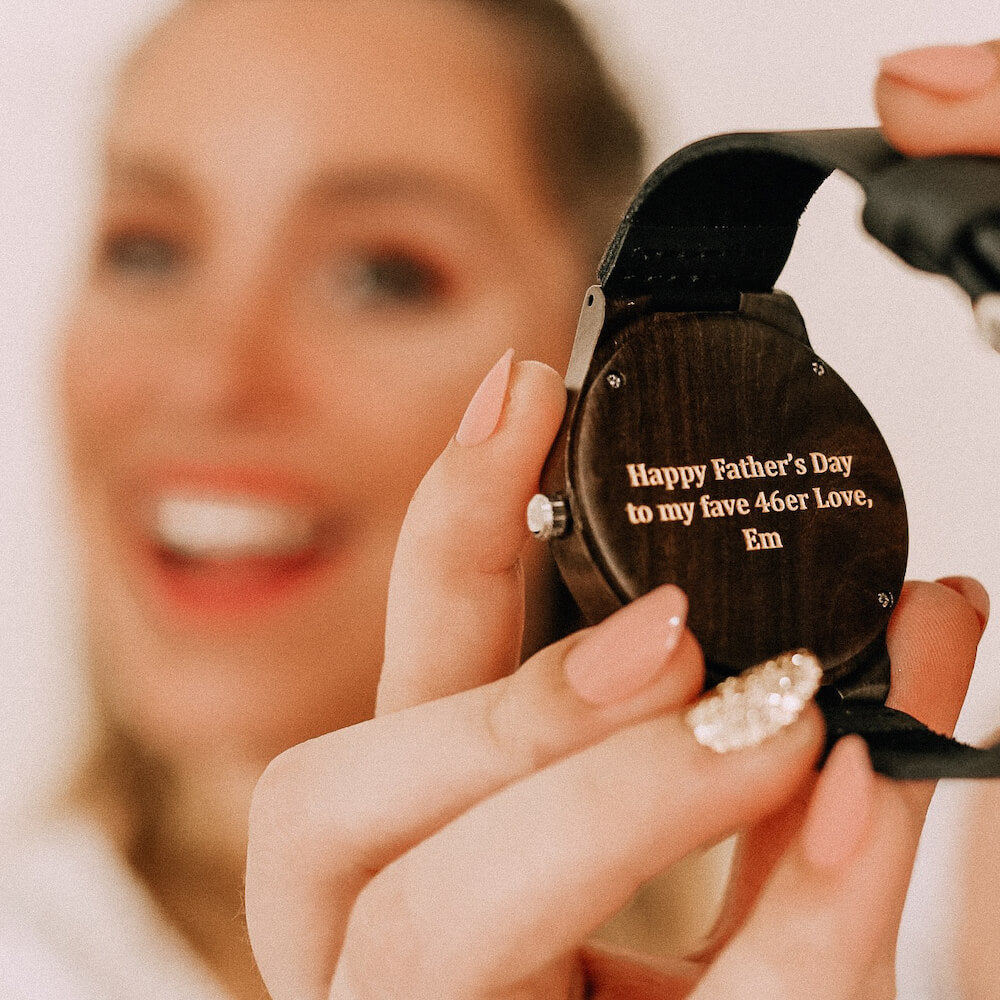
Treehut brings both together in its stainless steel watches collection, combining the natural color and grain of wood with the strength and contrast of steel. Each watch is made in California and can be custom engraved with a message of your choice.
In the end, focus on the combination that fits how you want your watch to look, feel, and wear over time.
Frequently Asked Questions (FAQs)
-
Are wooden watches durable?
Yes. Quality wooden watches can handle normal daily wear for years when cared for properly. However, wood remains more vulnerable than stainless steel to hard impacts and prolonged moisture. Construction quality and care also affect lifespan.
-
Can you get a wooden watch wet?
Some wooden watches can handle occasional splashes, but you should not assume they can handle swimming or immersion. Check the manufacturer's stated water-resistance rating and care instructions for the exact model.
-
How long do wooden watches last?
A well-made wooden watch can last for many years. Its lifespan depends on construction quality, movement, exposure to moisture and impacts, storage, and maintenance. Proper care can help wooden components remain in good condition for longer.
-
Do wooden watches scratch easily?
Wood can pick up scratches and dents during wear. However, grain patterns may make minor marks less noticeable than scratches on highly polished metal. Hard impacts pose a greater concern because they can chip or crack wooden components.
-
Is stainless steel good for watches?
Yes. Stainless steel works well for watches because it combines strength, corrosion resistance, durability, and relatively simple maintenance. Watchmakers can also brush, polish, or coat it to produce a wide range of finishes.
-
Which watch material is best for everyday wear?
Stainless steel often suits demanding everyday use because it handles impacts, sweat, and moisture well. Wood can also work well for everyday wear if you value lower weight and take reasonable care around prolonged moisture and hard knocks.