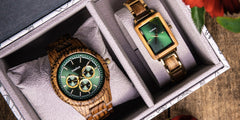


Hold two wooden chronograph watches side by side and the difference becomes obvious immediately. One flashes bold stripes across the dial. The other goes darker and smoother, almost like polished coffee wood. Treehut uses both materials often, so this comparison comes up regularly. Give people a moment with both watches, and they almost always pick one instantly. Some go straight for the striped dial. Others reach for the darker wood every time. That contrast is exactly what makes zebrawood vs. walnut watches such an interesting comparison.
What Makes Wooden Chronograph Watches Unique
Chronograph watches already carry visual depth thanks to sub-dials and pushers. Wood adds a completely different layer to that design. It changes how the watch looks, how it sits on the wrist, and how people react when they notice it. That’s why the conversation around zebrawood vs. walnut watches often begins with what makes wooden watches appealing in the first place.
Wooden chronograph watches stand apart for a few clear reasons:
- Every dial carries a one-of-a-kind pattern. Wood grows in irregular formations, and those markings remain visible once the material becomes a watch dial.
- Chronograph dials add mechanical character. Chronographs include stopwatch functions controlled by side pushers. Sub-dials track seconds and elapsed time, giving the face a layered, technical look.
- Wood softens the overall appearance of the watch. Stainless steel reflects light sharply. Wood diffuses that light across the dial, creating a softer visual effect.
- Comfort becomes part of the design. Wood components often reduce overall weight. Many wearers notice the difference after a full day.
- The category includes many accessible options. Wooden models often appear among affordable chronograph watches, which makes them appealing to first-time chronograph buyers.
Put these elements together, and the result is a chronograph that feels noticeably different from the usual metal designs.
The Look & Character of a Zebrawood Chronograph Watch

Some watches stay subtle. Zebrawood does the opposite. Dark lines stretch across the dial in bold stripes that immediately draw attention.
A zebrawood chronograph watch usually shows these traits:
- Striped patterns that stand out immediately. Zebrawood grows with dark lines running through a lighter base. Once shaped into a watch dial, those stripes almost look hand-painted.
- Warm honey and sand tones. The lighter base color helps the stripes stand out while pairing easily with everyday clothing like denim, canvas jackets, and neutral shirts.
- High visual contrast. The dark lines cut sharply through the lighter wood, creating a dial that feels bold and visually striking.
- A watch that sparks conversation. People often ask about zebrawood watches because the striped pattern looks so distinctive.
- A natural fit for casual wardrobes. Weekend outfits, outdoor settings, and travel gear all complement zebrawood.
When people explore zebrawood vs. walnut watches, zebrawood usually appeals to those who enjoy visible patterns and eye-catching materials.
The Warm Character of a Walnut Chronograph Watch
Walnut moves in a different direction. Instead of dramatic striping, it relies on deep brown tones and smoother surface patterns. Many buyers also reach for walnut when they want a chronograph that works with almost anything.
A walnut chronograph watch usually offers these features:
- Deep brown coloring. Walnut ranges from chocolate brown to espresso tones. These darker shades create strong contrast with metallic watch hands.
- Smooth flowing patterns. Rather than stripes, walnut forms gentle waves across the wood surface.
- A dial with deep, even color. The darker tone gives the dial depth without sharp contrast.
- Easy pairing with darker clothing. Black jackets, navy shirts, and charcoal layers work naturally with walnut.
- Versatility across everyday situations. Walnut fits easily into both relaxed and professional environments.
Because of this flexibility, walnut often becomes the preferred option for buyers comparing zebrawood vs. walnut watches.
Zebrawood vs. Walnut: Key Style Differences
Seeing the two woods side by side makes the difference clear. These visual details explain why the choice between zebrawood vs. walnut watches often feels personal.
- Color tone: Zebrawood shows lighter shades with bold striping. Walnut leans toward deeper brown tones.
- Pattern visibility: Zebrawood displays strong, graphic lines. Walnut surfaces appear smoother and more subtle.
- Dial contrast: Zebrawood relies on sharp visual separation. Walnut builds depth through darker wood tones.
- Wardrobe compatibility: Zebrawood pairs naturally with relaxed clothing and outdoor wear. Walnut integrates easily with both casual and work outfits.
- Overall visual impact: Zebrawood draws attention quickly. Walnut delivers a richer, darker presence.
These differences often guide buyers when choosing between zebrawood vs. walnut watches.
How to Choose the Right Wood for Your Personal Style

When deciding between zebrawood vs. walnut watches, daily habits often answer the question faster than design preferences.
Consider zebrawood if you:
- Enjoy accessories that stand out. The striped pattern draws attention immediately.
- Wear lighter or earth-tone clothing frequently. Beige, olive, and denim pair naturally with zebrawood’s lighter base.
- Spend time outdoors or traveling. The bold pattern feels right at home with relaxed settings and weekend gear.
- Appreciate visible wood textures. Zebrawood highlights those details in a dramatic way.
Consider walnut if you:
- Prefer darker accessories. Walnut complements black, navy, and charcoal wardrobes.
- Work in environments that lean professional. The deeper tone integrates easily with business clothing.
- Like subtle surface texture instead of bold striping. Walnut grain appears smoother and more understated across the dial.
- Want a watch that moves easily between settings. Walnut transitions comfortably from work hours to evening plans.
Both woods frequently appear among the best chronograph watches for men, especially when paired with reliable chronograph movements. In the end, the choice between zebrawood vs. walnut watches often reflects how bold or understated you want the dial to appear.
How Treehut Brings Wood & Craft Together
Treehut began in California with a simple idea: watches should feel connected to nature and the people who wear them. That belief still guides the way each piece is designed and crafted today.
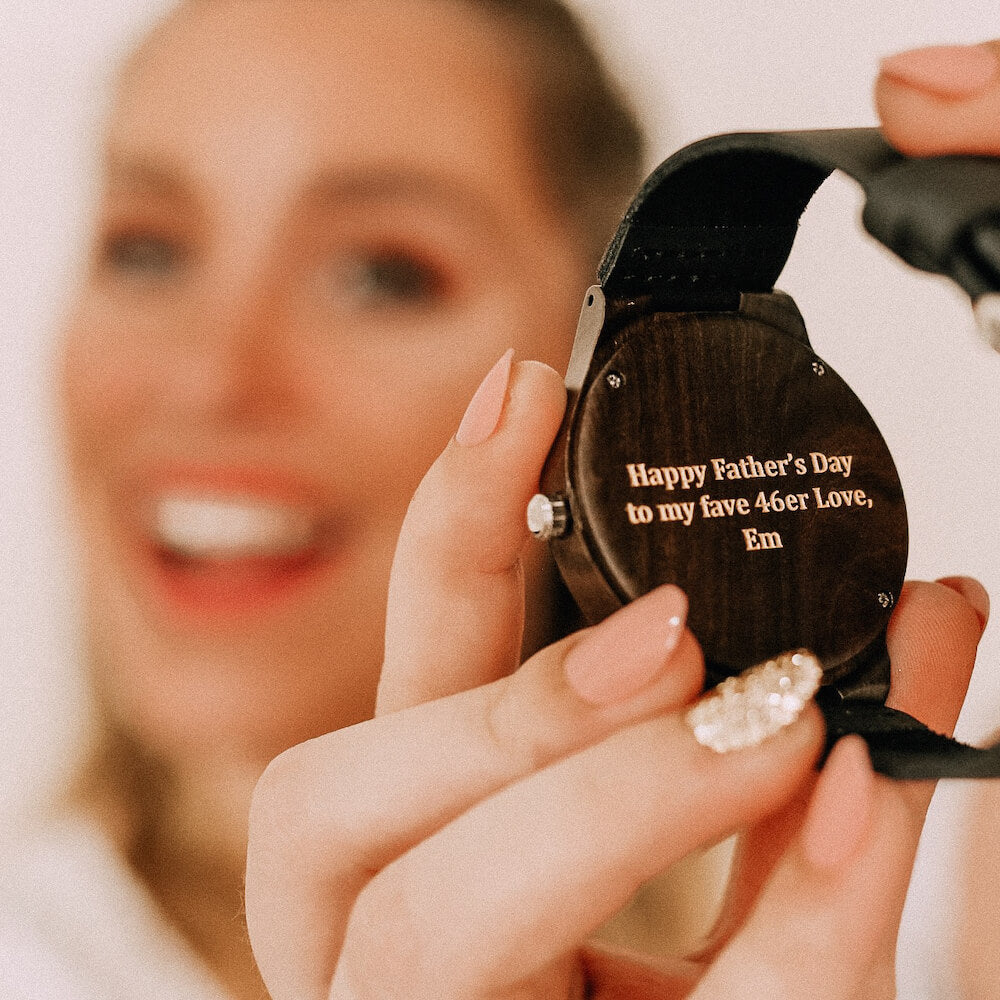
Real wood sits at the center of that process. Each watch is cut, shaped, and assembled with care. It’s also finished with a personal engraving chosen by the person giving it. That small message on the back often turns the watch into something lasting – for example, a reminder of a birthday, anniversary, or shared milestone.
That philosophy is what makes zebrawood vs. walnut watches an interesting choice in the first place. It isn’t simply about color or pattern. It’s also about choosing the material that feels right for the person who will wear it every day.