

A watch can win you over in three photos, then arrive looking oddly large on your wrist. Knowing how to choose a wooden watch helps you get the details right before you buy. Size matters, but wood, movement, construction, and useful features deserve equal attention.
Treehut offers plenty of wooden watches for him. So, instead of scrolling until one “feels right,” use a few practical filters first. You will reach a better choice much faster.
Use This Wooden Watch Buying Guide to Set Your Priorities
Before comparing individual models, think about what you expect from the watch and how it will fit into your routine. Knowing how to choose a wooden watch starts with understanding your own priorities.
- Start with where you will wear it. Think about workdays, weekends, dinners, travel, or special occasions. Your usual setting helps establish the kind of watch that makes sense for your life.
- Consider how often it will reach your wrist. Daily wear places greater importance on comfort and practicality. Occasional wear gives you greater freedom to prioritize distinctive design details.
- Look at what you already wear. Your clothing, watches, and other accessories provide useful clues about your preferences. Pay attention to recurring colors, proportions, and materials.
- Decide what matters most to you. You may care most about fit, mechanical interest, or useful functions. Ranking those priorities makes similar-looking watches much easier to compare.
- Set your spending range before browsing deeply. A clear range keeps your search focused and helps you judge which materials, movements, and features offer value.
With those basics settled, you can assess what to look for in a wooden watch in a sensible order: fit, wood, movement, design, and features.
Get the Proportions Right With This Wooden Watch Size Guide

Getting the fit right means looking at several measurements together. When learning how to choose a wooden watch, consider your wrist alongside the case and band proportions.
- Start with your wrist circumference and shape. Circumference gives you a useful baseline, while wrist shape affects how a case sits. The same case can sit differently on a flatter wrist than on a rounder one with the same circumference.
- Check the case diameter. This measurement tells you how much wrist space the case occupies from side to side. Smaller diameters generally suit narrower wrists, while larger diameters take up more space on broader wrists.
- Compare the lug-to-lug length. This measures the case from the tip of one lug to the opposite lug. The lugs should generally sit within your wrist rather than extending beyond its edges.
- Factor in case thickness. A thicker case sits higher above your wrist and feels more substantial. A slimmer case keeps a lower profile and usually slips beneath a shirt cuff more easily.
- Look at the band width last. Band width affects how balanced the complete watch appears. Broader bands visually support larger cases, while narrower bands create a lighter proportion.
A practical wooden watch size guide treats these measurements as a set rather than relying on case diameter alone. Once the proportions work together, judging fit becomes much easier.
Measure Your Wrist Before Comparing Watch Sizes
Once you know which dimensions matter, your wrist circumference gives you a useful starting point when deciding how to choose a wooden watch. A flexible measuring tape works best.
- Wrap the tape around the spot where you normally wear your watch.
- Keep it snug against your skin while leaving it comfortable.
- Note the measurement in inches or millimeters.
- Repeat the measurement once to make sure your first reading was accurate.
- Use that number alongside the sizing specifications of the watches you are considering.
Already have a watch that fits well? Measure its case and compare those dimensions with your options. Your current favorite makes a handy reference and charges nothing for the consultation.
Which Is the Best Wood for Watches?
When considering how to choose a wooden watch, compare each species by its tone, pattern, and overall appearance.
Treehut uses several woods across its watches, and each creates a noticeably different result. The best wood for watches depends on which of these characteristics appeals to you most.
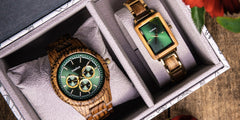
- Walnut has rich brown coloring with natural shifts between lighter and darker areas. Its grain is visible yet balanced, making the wood distinctive without dominating the entire design.
- Ebony has a deep brown to near-black appearance. Its darker surface creates strong contrast against lighter dial details, hands, and hardware.
- Zebrawood is easy to recognize by its alternating dark and light streaks. The pronounced linear grain makes individual sections of the watch visually active.
- Koa typically combines warm brown, amber, and golden tones. Its grain can show considerable movement, giving different cuts their own patterns.
- Maple sits toward the lighter end of the wood spectrum. Its pale cream and light golden tones create a brighter appearance, while the grain tends to look relatively subtle.
- Purpleheart stands apart through its naturally purple-brown coloring. The tone can deepen as the wood ages, giving it a particularly recognizable identity.
- Bamboo has a light, clean appearance with fine linear markings. Technically a grass rather than a wood, bamboo still provides the natural look associated with wooden watches.
Because wood is a natural material, grain patterns and color can vary between watches made from the same species. Product photos show the general appearance, but each watch may have slight variations in grain and tone.
Match the Wood Tone to What You Already Wear
When deciding how to choose a wooden watch, your wardrobe offers useful clues about the colors that will work for you. Start with the shades and materials you already wear regularly.
If you wear plenty of black, navy, gray, or silver-toned accessories, ebony can fit naturally into that palette. Walnut and koa pair well with warmer browns, tan leather, olive, rust, and other earth tones.
For a lighter look, maple and bamboo work well alongside cream, beige, pale denim, and softer neutrals. Meanwhile, zebrawood or purpleheart can add stronger contrast if you prefer accessories that stand apart.
Pay attention to your shoes, belts, bracelets, and other watches too. They often reveal your color preferences faster than staring at seven wood samples ever will.
Quartz or Automatic? Choose the Movement That Fits Your Routine
When working out how to choose a wooden watch, consider how much involvement you want from its movement. Quartz favors convenience, while automatic offers a more hands-on mechanical experience.
- Quartz uses a battery to power the movement. It offers accurate timekeeping and requires relatively little day-to-day attention. This makes it practical if you want your watch ready between wears.
- Automatic uses your movement to help wind the watch. A rotor inside the case transfers motion from your wrist to the mainspring. This mechanism appeals to people who enjoy the engineering behind timekeeping.
- Your wearing habits can help decide between them. Quartz works well if you rotate several watches or wear one occasionally. An automatic may need winding and resetting after its power reserve runs down.
- Maintenance differs too. Quartz watches eventually need a battery replacement. Automatic movements may require periodic servicing to keep their mechanical components performing properly.
- Price can reflect the movement inside. Automatic mechanisms contain many interacting parts and often cost more than comparable quartz options. Materials, construction, and other details also influence the final price.
Think about how often you wear a watch, how much maintenance you are comfortable with, and what you expect at your price point. Those factors will usually point you toward the movement that makes the most sense for you.
From Three-Hand to Chronograph: Understanding the Types of Wooden Watches
Knowing how to choose a wooden watch also means deciding what you want from the dial. Some designs keep timekeeping simple, while others add timing functions or put the mechanics on display.
- Three-hand watches focus on everyday timekeeping. Separate hour, minute, and second hands keep the dial easy to read. Their simpler layout also gives the wood, indices, and dial greater visual space.
- Chronograph watches add stopwatch functionality. Pushers control the chronograph, while subdials typically track elapsed time. Choose one if you use timing functions or prefer a more detailed dial.
- Open-heart watches reveal part of the mechanical movement. An opening in the dial lets you see some components at work. You still get plenty of dial space alongside that mechanical detail.
- Skeleton watches expose a larger portion of the movement. Gears, bridges, and other components become part of what you see when checking the time. They suit people who enjoy the mechanics as much as the display.
Look at the watches you already enjoy wearing and notice how much dial detail you tend to prefer. That familiar preference can help you narrow the options faster.
Look Beyond the Dial: Features Worth Checking
As you figure out how to choose a wooden watch, focus on the specifications that affect how you will actually use it.
- Date displays put useful information within a glance. They make sense if you regularly check the date during work, travel, or a busy week.
- Water resistance tells you how much moisture exposure the watch is designed to handle. Ratings vary, so check the specification for the exact model you are considering.
- Luminous hands or markers improve visibility in dim conditions. They can be useful during evening wear, travel, or frequent shifts between bright and darker spaces.
- Crystal material protects the dial and affects everyday durability. Different crystal types vary in scratch resistance, impact resistance, and clarity. Check which material a model uses when comparing similar watches.
- Bracelet adjustability gives you greater control over fit after purchase. Removable links can help you fine-tune how the watch sits once it reaches your wrist.
Rather than counting features, consider how often each one will matter in your routine. The right features will still matter long after you have forgotten the spec sheet.
Don’t Treat the Band as an Afterthought
If you’re wondering how to choose a wooden watch you’ll enjoy wearing regularly, pay close attention to the band. Its material and construction can make a noticeable difference in comfort.
A wood-link bracelet carries the natural material around your wrist and creates a cohesive look with the case. Its linked construction also gives the watch a firmer, more structured feel.
Leather straps flex around the wrist and soften with regular wear. They also create contrast against the wood, giving the watch a different overall character.
Finally, check the fastening system. A secure, easy-to-use clasp or buckle matters every time the watch goes on or comes off.
The dial may catch your eye first, but the band often decides how comfortable the watch feels after several hours.
Stuck Between Two Watches? Use This Tie-Breaker
You may know how to choose a wooden watch and still end up with two equally good options. Once both meet your practical needs, a few different questions can break the tie.
- Picture each watch six months from now. Newness can make unusual details especially appealing at first. Ask which design you can genuinely see yourself reaching for regularly.
- Look for the compromise you would notice most. One watch may have your preferred wood, while another has the dial you like better. Decide which concession would bother you every time you wore it.
- Consider what your collection already has. If you own several similar watches, the less familiar option may add something useful. If this will be your main watch, versatility may carry greater weight.
- Pay attention to your first preference. Before comparing specifications again, notice which watch you keep returning to. Repeatedly reopening the same product page usually tells you something.
- Use price as the final reality check. If one option costs more, identify exactly what the extra money gives you. Then decide whether that difference matters enough to justify it.
At this stage, another round of specification comparisons may only send you in circles. Choose the watch whose compromises you can live with and whose details keep pulling you back.
Find Your Wooden Watch at Treehut

Once you know how to choose a wooden watch, finding the right one becomes much simpler. Treehut brings together handcrafted designs and distinctive natural materials across a wide range of watches.
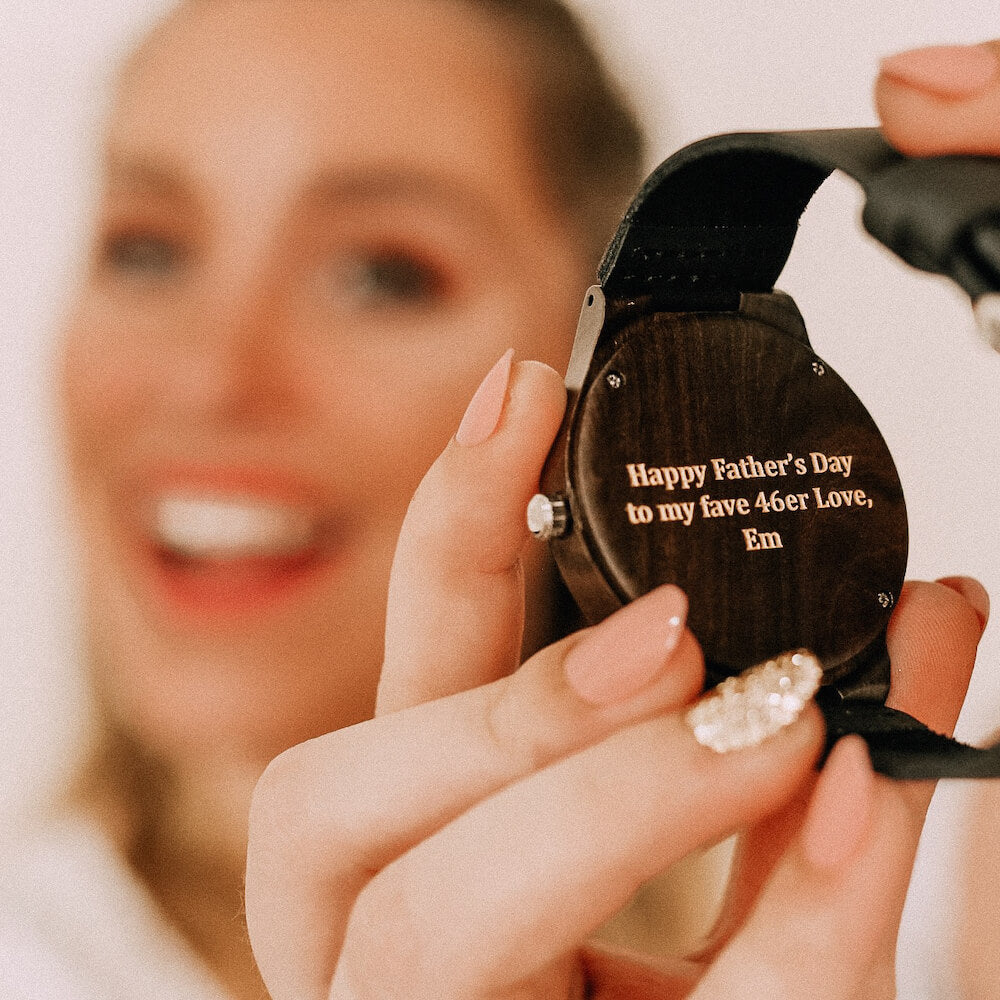
The brand grew from a family-run California business, and that personal approach still shapes how Treehut makes its pieces. Responsible material choices reflect its connection to nature, while custom engraving lets you add a date, place, message, or memory that means something to you.
Choose the watch that fits your wrist, your routine, and your taste. Then make it yours in the way only you can.
Frequently Asked Questions (FAQs)
-
Are wooden watches durable?
Yes, wooden watches can be durable enough for regular wear when they use quality materials and solid construction. Their durability also depends on the wood, finish, hardware, movement, and care. Protecting your watch from excessive moisture and harsh impacts helps preserve its condition.
-
Can wooden watches get wet?
Some wooden watches can handle limited water exposure, depending on their water-resistance rating. Always check the rating of your specific watch before exposing it to water. Proper care also helps protect the wood and its finish over time.
-
How do you care for a wooden watch?
Keep your wooden watch clean, dry, and safely stored when you are not wearing it. Wipe it gently with a soft cloth after use and follow the maker’s guidance for moisture exposure. Use only care products recommended for your specific watch and finish.
-
Are wooden watches lightweight?
Yes, wooden watches are often lightweight compared with similarly sized all-metal watches. Exact weight depends on the wood, case construction, bracelet, hardware, and movement. Check the listed product weight when comparing individual models.
-
Do wooden watches change color over time?
Yes, natural wood can gradually change in tone and appearance with age and wear. Light, moisture, skin oils, wood species, and finish can all influence these changes. Proper care helps maintain the watch while allowing the material to develop naturally.