

Leather rarely wears out all at once. First, it may soften around your wrist, crease near the buckle, or darken where you handle it most. So, how long do leather watch straps last, and which of those changes actually matter? The answer depends on the leather, how often you wear it, and the conditions it faces day to day.
Whether you already own a leather-band watch or are considering one from Treehut, knowing what counts as normal wear – and what signals actual deterioration – can help you care for the strap and recognize when it needs replacing.
How Long Does a Leather Watch Strap Typically Last?

There isn't a single lifespan that applies to every leather watch strap. How long do leather watch straps last with regular use? Frequency of wear makes a major difference: a daily strap accumulates wear much faster than one worn only a few times each month.
Leather also changes as it breaks in. It may soften, curve more closely around your wrist, develop creases, or shift slightly in color. These changes can happen while the strap remains perfectly usable, so appearance alone doesn't tell you when its useful life has ended.
Material and construction make a difference too. When comparing real and faux leather straps, appearance tells only part of the story because the materials don't necessarily age or wear in the same way. Among genuine leather straps, tanning, finishing, lining, thickness, and construction can also affect durability.
What Affects the Lifespan of a Leather Watch Strap?
Two similar straps can age very differently. How long do leather watch straps last under different conditions? Daily wear, fit, climate, construction, and even what comes into contact with the strap can affect how quickly it shows wear.
- Leather quality and construction. Leather type matters, but construction deserves equal attention. Stitching, lining, edge finishing, thickness, and reinforcement affect how well a strap handles repeated bending and pulling.
- Frequency of wear. A daily strap experiences more friction, body heat, handling, and flexing. Rotating watches or straps reduces the amount of continuous wear placed on one band.
- Sweat and moisture. Leather can absorb moisture from the wrist. Sweat also carries salts and oils that may remain on the material after the moisture evaporates.
- Fit. Wearing a strap too tightly increases tension as your wrist moves. That extra force often concentrates around the adjustment hole, buckle area, and sections that bend most frequently.
- Climate. Prolonged heat and sunlight can dry leather or alter its color. In humid conditions, a damp strap may also take longer to dry fully.
- Skin and personal-care products. Lotion, sunscreen, fragrance, soap, and other products can transfer from your wrist to the strap. Depending on the leather and its finish, they may stain the surface or affect its texture.
- Storage. Leather benefits from a dry, ventilated environment between wears. Direct sunlight, damp spaces, or storing the watch while the strap is still moist can add unnecessary stress.
Do Leather Watch Straps Stretch Over Time?
Yes, leather watch straps can change shape slightly with wear. As the leather becomes more flexible, it begins to follow the curve of your wrist more closely. This normal break-in can make an initially firm strap more comfortable without weakening it.
Stretching becomes more concerning when it affects high-stress areas. An adjustment hole may become elongated, the leather may thin around a frequent bend, or the strap may stop holding the same fit. Wearing the watch too tightly can accelerate these changes because one hole and the surrounding leather absorb more tension as your wrist moves.
So, how long do leather watch straps last once stretching becomes noticeable? A change in shape alone doesn't determine the strap's remaining lifespan. A softer curve around the wrist usually reflects normal wear, while distorted holes, thinning leather, or a weakened buckle area point to deterioration that deserves closer attention.
Why Did My Leather Watch Strap Crack So Quickly?
Cracks often appear where a leather strap bends most. Each time you fasten the watch or move your wrist, the same sections flex again, concentrating wear around the buckle, adjustment holes, and other frequent bending points.
Moisture can add to that stress. Repeated exposure to sweat or water followed by drying may leave the leather less flexible over time. Heat and prolonged sunlight can also contribute to dryness, while a tight fit puts extra tension on areas already bending repeatedly. In addition, harsh cleaners or unsuitable conditioning products can affect the leather or its finish.
How long do leather watch straps last once cracks appear? The answer depends partly on whether you're seeing ordinary surface creasing or structural damage. Shallow creases usually develop as leather conforms to the wrist, while deeper splits can weaken the material, particularly around holes and attachment points.
How to Make a Leather Watch Strap Last Longer
Care won't keep leather looking new forever, but it can prevent avoidable damage. A few practical habits can reduce unnecessary wear and help the strap stay in good condition for longer.
- Let a sweaty strap dry naturally. Remove the watch and leave it in a ventilated area. Avoid hair dryers, radiators, or other direct heat sources, which can dry the leather too quickly.
- Take it off before swimming or showering. Leather isn't designed for repeated soaking. Removing your watch before water-heavy activities limits unnecessary moisture exposure.
- Rotate watches or straps when possible. If you wear a watch every day, switching occasionally gives the leather more time to dry between wears.
- Keep the fit comfortable. The watch should stay in place without digging into your wrist. Wearing it too tightly puts extra strain on adjustment holes and frequent bending points.
- Limit contact with personal-care products. Apply sunscreen, lotion, and fragrance before putting on your watch, and let them absorb or dry first.
- Follow care instructions for the specific leather. Different finishes may respond differently to cleaners and conditioners. Check the manufacturer's guidance before applying any leather-care product.
- Store the watch somewhere dry and shaded. Keep it away from prolonged sunlight and humid spaces, and let a damp strap dry before placing the watch in a closed box or case.
When Should You Replace a Leather Watch Strap?
So, how long do leather watch straps last before replacement becomes necessary? Age alone won't tell you. A leather strap doesn't need replacing simply because it looks worn; replacement becomes more important when damage affects the parts responsible for keeping the watch secure.
- Deep cracks have developed. Fine surface creases often come with regular use. Replace the strap when cracks penetrate the leather, continue to spread, or weaken an area that bends frequently.
- Adjustment holes are tearing or losing their shape. The buckle pin needs enough material around it to stay secure. An elongated or torn hole may eventually fail under tension.
- Stitching or layers are separating. Loose structural stitching or splitting layers can allow the strap to come apart, especially when the separation continues to spread.
- The attachment points are deteriorating. Inspect the leather around the spring bars or other case connections. Damage here requires attention because these points secure the strap to the watch.
- The strap no longer feels secure. If you can no longer fasten or wear the watch with confidence, don't wait for the strap to fail completely. When you buy a leather watch band as a replacement, confirm that its width and attachment system match your watch.
Treehut’s Approach to Leather-Band Watches

Treehut pairs genuine leather bands with natural wood to create watches that feel distinct from conventional metal designs. The grain and color of the wood vary naturally from piece to piece, while the leather brings warmth and flexibility to the wrist.
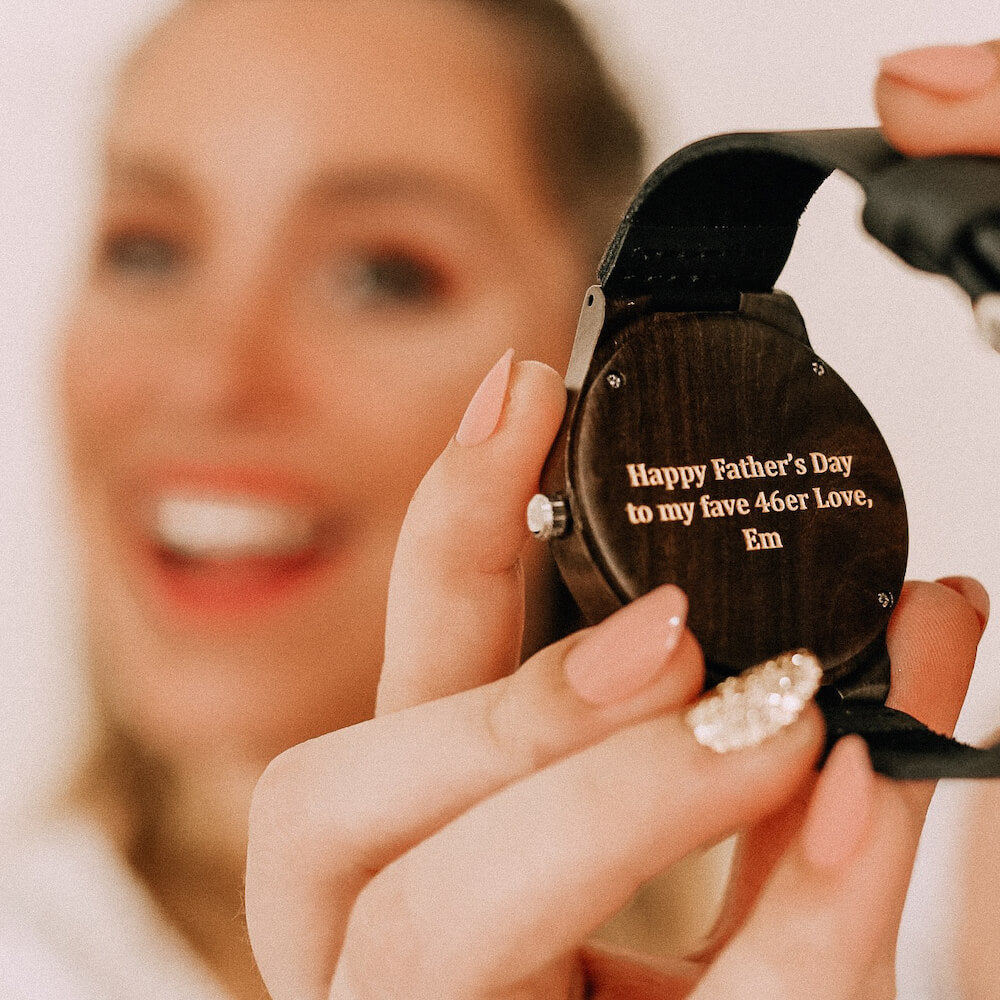
Each watch is made in California and can be custom engraved. A name, date, coordinates, or short message can give the watch a connection to a person, place, or memory, especially when it's chosen as a gift.
Because the leather band sits against the wrist and moves throughout the day, it naturally receives a significant amount of everyday wear. Treehut recommends keeping the leather away from moisture and direct sunlight and gently wiping it with a dry cloth. With regular care and replacement when the band eventually wears out, the watch itself can continue to be worn and enjoyed.
Frequently Asked Questions (FAQs)
-
How often should I replace my watch strap?
There is no fixed replacement schedule for a leather watch strap. Replace it when deep cracks, torn adjustment holes, separating layers, damaged stitching, or weakened attachment points affect its fit or security.
-
Is creasing normal on a leather watch strap?
Yes. Light creasing is a normal result of leather bending around the wrist and buckle. Deep cracks, splitting, or damage around the adjustment holes may indicate deterioration rather than ordinary wear.
-
Can a leather watch strap get wet?
Minor accidental contact with water does not necessarily damage a leather watch strap. However, repeated soaking can affect the leather and its finish, so remove the watch before swimming or showering and let a wet strap dry naturally.
-
Can a cracked leather watch strap be repaired?
Minor surface dryness may respond to appropriate leather care, depending on the leather and its finish. However, deep structural cracks cannot reliably regain their original strength, particularly when they affect areas that carry tension.
-
What is the best way to clean a leather watch strap?
Gently wipe the strap with a soft, dry cloth for routine cleaning. For deeper cleaning, follow the manufacturer's instructions for that specific leather, since water, cleaners, and conditioners can affect finishes differently.