

A watch can tell you plenty about itself before you ever look at the dial. How often it needs your attention, how long it keeps running off your wrist, and how closely it keeps time all start with the movement inside. Understanding the automatic vs. quartz watch difference can therefore reveal more about what it is like to own and wear each one.
Treehut offers both types in its collection of stainless steel watches, so understanding how each movement works can help you narrow down what you actually want from a watch.
Quick answer: Choose an automatic watch if you enjoy mechanical craftsmanship, regular interaction, and a smoother-looking seconds hand. Choose quartz if you prioritize accuracy, convenience, and minimal maintenance. Quartz is usually easier for occasional wear, while automatic can suit someone who wears the same watch regularly.
Automatic vs. Quartz Watch: Key Differences at a Glance
The automatic vs. quartz watch distinction starts with one basic principle: automatic watches store mechanical energy in a mainspring, while quartz movements run on electrical energy.
|
Factor |
Automatic |
Quartz |
|
Power source |
Wound mainspring |
Battery |
|
Accuracy |
May gain or lose seconds over time |
Generally keeps more accurate time |
|
When not worn |
Stops after its power reserve runs out |
Keeps running while the battery has power |
|
Maintenance |
May require periodic mechanical servicing |
Usually needs battery replacement, with less mechanical servicing |
|
Seconds hand |
Usually advances several times per second |
On most analog models, usually ticks once per second |
|
Daily involvement |
May need winding and resetting after it stops |
Requires little regular attention |
How Do Automatic and Quartz Watches Work?
Understanding the mechanics adds useful context to the automatic vs. quartz watch comparison. Automatic watches store mechanical energy in a mainspring, while quartz movements use a battery and electronic regulation.
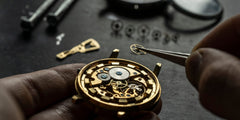
Inside an automatic watch, a weighted rotor turns in response to the motion of your wrist. The rotor helps wind the mainspring, which stores energy. A system of gears and an escapement then controls how that energy reaches the hands.
Many automatic movements also allow manual winding. However, a mainspring can hold only a limited amount of energy. The length of time a fully wound movement can run before stopping is known as its power reserve.
Quartz works differently. A battery sends an electrical current through a quartz crystal, causing it to vibrate at a stable frequency. Electronic circuitry counts those vibrations and uses them to regulate the movement.
You can see one result of these different mechanisms on the dial. Most analog quartz watches tick once per second, while a typical automatic advances the seconds hand several times per second. Those smaller, more frequent movements create the smoother sweep commonly associated with mechanical watches.
Automatic Watch Advantages: Why Choose a Mechanical Movement?

Mechanical involvement is an important part of the automatic vs. quartz watch decision for some buyers. An automatic movement offers more opportunities to interact with the mechanism rather than simply relying on it for the time.
- Regular wear can keep the watch running. Wrist motion helps wind the movement throughout the day, so frequent wear can reduce the need for manual winding.
- Manual winding gives you direct contact with the mechanism. On models that support it, turning the crown lets you add energy to the mainspring yourself. That physical interaction does not exist with a standard quartz movement.
- The movement does not need a conventional battery to run. Automatic watches store mechanical energy instead. While they have their own servicing needs, replacing a movement battery is not part of owning one.
- The mechanics can become part of the design. Watches with exhibition casebacks reveal components such as the rotor, bridges, and gears. You can see parts of the mechanism at work rather than having everything concealed behind the caseback.
These qualities can matter if you want to use an automatic watch for more than checking the time. The movement gives you something mechanical to operate, observe, and learn about as you become familiar with the watch.
Quartz Watch Advantages: What Makes Quartz Practical?

Convenience creates one of the clearest differences in the automatic vs. quartz watch experience. Because a quartz movement relies on battery power, it generally requires less attention from the wearer during normal use.
- Quartz keeps highly consistent time. Its electronic regulation allows the watch to maintain accurate time with less variation than a typical mechanical movement.
- It keeps running between wears. A quartz movement does not depend on wrist motion to replenish its energy. As long as the battery has sufficient charge, leaving the watch unworn does not cause it to stop.
- You do not need to manage a power reserve. There is no need to wind the movement or wear the watch regularly just to keep it running. That removes one task from day-to-day ownership.
A quartz watch still needs attention eventually, particularly when its battery runs down. Until then, the movement can keep doing its job without requiring much input from you.
Which Is More Accurate: Automatic or Quartz?
Accuracy is one area where the automatic vs. quartz watch difference can be measured directly. Quartz movements generally keep closer time, while automatic movements naturally allow more variation.
An automatic regulates time through mechanical components such as the balance wheel and escapement. Its rate can vary with position, temperature, regulation, and the movement itself. Quartz relies on the stable frequency of a vibrating crystal, which allows much more consistent regulation.
However, accuracy varies within both categories. Manufacturers may publish expected tolerances for specific movements or models, so check those figures if precise timekeeping matters to you. They provide a more useful comparison than assuming every automatic or quartz watch performs the same way.
How Do Maintenance Needs Differ Over Time?
Long-term ownership adds another consideration to the automatic vs. quartz watch decision: the two movements require different types of maintenance. One may need mechanical servicing, while the other typically requires battery replacement.
Automatic movements contain mechanical parts that stay in motion while the watch runs. Eventually, lubricants can deteriorate and components can wear. A watchmaker may then need to clean, lubricate, adjust, or replace parts during a service.
However, there is no single service interval for every automatic watch. Movement design, use, condition, and manufacturer guidance all matter. Check the recommendations for the specific watch rather than following a universal schedule.
A conventional quartz watch has a different recurring need: battery replacement. Once the battery runs down, it needs replacing. Depending on the watch, a technician may also inspect the seals or test its water resistance at the same time.
Long-term repairability depends on more than whether a watch is automatic or quartz. Movement quality, parts availability, manufacturer support, and previous maintenance all matter. A well-maintained watch from either category can remain usable for many years, provided the necessary parts and service remain available.
What’s the Best Watch Movement for Everyday Wear?
The best watch movement for everyday wear depends on how often you wear a watch, how frequently you rotate between models, and how much attention you want the movement to require.
- You wear the same watch most days: Automatic can fit naturally into this routine because regular wrist time helps keep it wound. If taking a watch off at night and putting it back on the next day describes your usual pattern, its limited power reserve may rarely affect you.
- You switch between several watches: Quartz can be easier to manage. You can leave one aside while wearing another without having to think about whether its movement has enough stored power for the next time you reach for it.
- You wear a watch only occasionally: Quartz is usually the simpler option for a watch reserved for weekends, events, or certain outfits. Automatic can work just as well, but you may need to wind and reset it after longer periods off the wrist.
- You want your watch to be more than a timekeeper: Automatic may suit you better if interacting with the watch adds something to the experience. If you would rather spend as little time as possible managing the movement, quartz is likely to suit that routine better.
Daily wear does not automatically favor one movement. A watch you wear constantly creates different demands from one you reach for twice a month, so your actual wearing habits are more useful than choosing by movement type alone.
Find the Right Treehut Watch for You
The automatic vs. quartz watch decision determines how your watch keeps running, but movement is only one part of choosing the right piece. Rooted in California, Treehut pairs watchmaking with natural materials such as wood and stone, bringing distinctive grain, color, and texture into its designs.
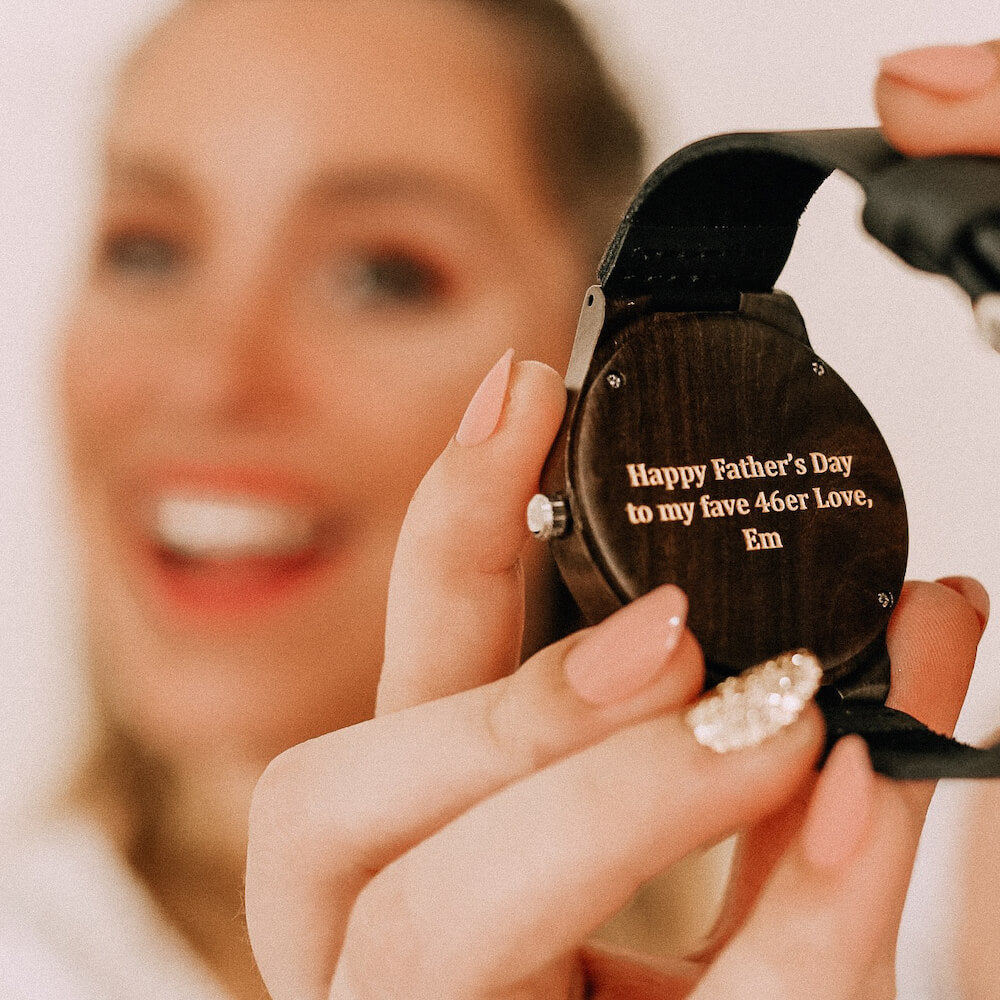
Personalization adds another dimension. Custom engraving can mark a birthday, anniversary, milestone, or simply turn a watch into something specific to the person receiving it. So, whether you're exploring quartz models or searching for the best automatic watches for men, look beyond the movement to the materials and details you will actually enjoy wearing or giving.
Frequently Asked Questions (FAQs)
-
Do automatic watches need batteries?
No. Automatic watches do not use a conventional battery to power the movement. They run on energy stored in a mainspring, which is wound by the motion of your wrist and, on many models, by manually turning the crown.
-
Why does my automatic watch stop when I take it off?
An automatic watch stops when its stored energy runs out. Once you remove it, wrist motion no longer winds the movement. How long it continues running depends on the watch's power reserve.
-
Do you have to wind an automatic watch every day?
Not usually. If you wear an automatic watch regularly, wrist movement can provide enough winding to keep it running. After the watch has been left unworn long enough to stop, you may need to wind and reset it before wearing it again.
-
How long does a quartz watch battery last?
A quartz watch battery commonly lasts a few years, but battery life varies by movement and watch functions. Features that require additional power can affect how long it lasts, so check the manufacturer's specifications for the individual model.
-
Can quartz watches last for decades?
Yes. A well-made quartz watch can last for decades, although longevity depends on the movement, components, care, and availability of replacement parts. Regular battery replacement alone does not guarantee that every quartz movement will remain repairable indefinitely.
-
Why are automatic watches usually more expensive than quartz watches?
Automatic watches often cost more because their mechanical movements contain numerous precision components that require more complex manufacturing and assembly. However, movement type alone does not determine price. Materials, construction, complications, brand, and finishing also affect cost.