

Some watches can sit in a drawer for weeks and keep ticking. Others wake up when you put them back on. That contrast sits at the heart of quartz vs. automatic watches, but the power source tells only part of the story.
Accuracy, upkeep, wearing habits, and mechanical interest also shape the choice. So, before choosing wooden watches for him from Treehut, it helps to understand what happens beneath the dial.
Quartz vs. Automatic Watches: What’s the Difference?
When comparing quartz vs. automatic watches, the biggest distinction lies in how they receive energy and regulate time. Those mechanics affect accuracy, care, cost, and behavior between wears.
|
Feature |
Quartz Watch |
Automatic Watch |
|
Power source |
A battery supplies electrical energy. |
Wrist movement helps wind a mechanical mainspring. |
|
Construction |
Uses electronic components and a motor. |
Uses interconnected gears, springs, and other mechanical components. |
|
Time regulation |
A quartz crystal regulates time electronically. |
A balance wheel and escapement regulate time mechanically. |
|
Accuracy |
Typically varies by seconds per month. |
Typically varies by seconds per day, depending on the movement. |
|
Between wears |
Keeps running while the battery has sufficient charge. |
Runs until its stored power reserve reaches its limit. |
|
Regular care |
Usually requires periodic battery replacement. |
Benefits from periodic professional servicing. |
|
Daily interaction |
Requires little involvement from the wearer. |
May need winding and resetting after sitting unworn. |
|
Typical cost |
Often costs less to manufacture. |
Often costs more because the movement requires greater mechanical complexity. |
Quartz and automatic movements take two distinct approaches to the same job: keeping accurate time on your wrist.
How Does a Quartz Watch Work?

The mechanics behind quartz vs. automatic watches begin with a fundamental difference: quartz uses electrical energy to measure time. At the center of that process sits a tiny quartz crystal.
A battery sends an electrical current through the crystal. Because quartz has piezoelectric properties, that current makes it oscillate at a highly stable frequency.
Most quartz watches use a crystal that oscillates 32,768 times each second. An electronic circuit counts those vibrations and converts them into regular electrical pulses.
Next, a small motor uses those pulses to move the watch hands. In simple terms, the crystal provides a consistent reference for measuring each second.
That process gives quartz watches their well-known accuracy. Although temperature and movement quality can affect performance, everyday quartz movements typically vary by only seconds each month.
How Does an Automatic Watch Work?

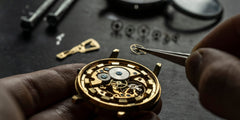
An automatic watch turns the movement of your wrist into stored mechanical energy. Inside the case, a weighted rotor moves as your wrist changes position.
The rotor transfers that motion through the winding mechanism and tightens the mainspring. As the mainspring unwinds, it releases energy through a series of gears.
The escapement controls that release, while the balance wheel oscillates at a regular rate. Together, these components regulate the movement of the watch hands.
The mainspring can store only a certain amount of energy, known as the power reserve. Its duration varies by movement and determines how long the watch can run between wears.
Because the system relies on mechanical components, several factors can influence its accuracy. These include position, magnetism, temperature, movement design, and servicing.
This mechanism highlights a fundamental difference in quartz vs. automatic watches. Quartz regulates time electronically, while an automatic watch relies on a mechanically regulated system powered by stored energy.
That mechanical complexity also contributes to the appeal of luxury automatic watches. Collectors may value the movement’s engineering, construction, finishing, and craftsmanship alongside its timekeeping performance.
Which Watch Movement Is Better for Your Lifestyle?
The automatic vs. battery watch question ultimately comes down to how you wear your watch and what you expect from it. When weighing quartz vs. automatic watches, consider these practical differences in the context of your own routine.
- Choose quartz if accuracy is a priority. Quartz generally keeps tighter time over weeks and months. So, it suits anyone who prefers checking the time rather than correcting it regularly.
- Think about how often you wear the same watch. Quartz suits frequent rotation because it keeps running between wears. Meanwhile, automatic works particularly well for people who reach for the same watch most days.
- Consider how involved you want to be. Quartz asks for little day-to-day attention. Automatic offers a more hands-on experience through regular wear, occasional winding, and resetting when needed.
- Plan for long-term care. Quartz mainly requires battery changes alongside routine watch care. Automatic movements need periodic servicing, which involves greater expense and specialist attention.
- Set your budget around what you value. Quartz often provides accurate timekeeping at a lower price. Automatic watches can cost more because their movements contain numerous precisely assembled mechanical components.
Your daily habits usually point toward the better choice. Pick the movement that fits the way you already wear and use a watch.
Why Choose Quartz Wooden Watches?
The quartz vs. automatic watches debate takes on another dimension when wood enters the design. Movement size and construction can influence how designers incorporate wood into the finished watch.
- Natural grain becomes a central design feature. Wood varies in pattern, tone, and markings, even within the same species. As a result, the material brings visual differences from one finished watch to another.
- Compact quartz movements create useful design options. Their construction can work with different case proportions and material combinations. Designers can therefore use wood across the case, bracelet, dial details, or alongside other materials.
- Quartz can keep the visual focus on the material. Wood grain, dial details, and material combinations can take the lead in the design. This works especially well for buyers drawn to the watch's exterior rather than visible mechanics.
- The pairing balances material character with practical timekeeping. Wood contributes texture and natural variation, while quartz provides consistent accuracy. Each element serves a distinct purpose within the finished watch.
- It suits buyers who choose a watch for its material first. If wood species, grain, and overall design attract you most, quartz provides a practical foundation for those features.
When shopping for quartz wooden watches, consider the watch as a complete object rather than focusing on movement alone. Wood species, case construction, bracelet design, and finishing can significantly shape how it looks and feels on your wrist.
What Makes Automatic Wooden Watches Special?
Wood brings natural grain, texture, and tonal variation to a watch, while an automatic movement adds mechanical depth beneath the surface. Bringing the two together creates some interesting design and construction considerations.
- Wood creates a distinct setting for mechanical details. Its grain and tonal variation contrast with gears, bridges, and other metal components. When the movement is visible, both the material and mechanics contribute to the design.
- Case construction calls for careful material integration. Automatic movements contain many moving parts that need secure positioning and protection. Designers can combine wood with structural metal components while keeping the natural material prominent.
- Wood can balance a mechanically detailed design. Open dials and visible movement components can introduce several visual layers. Wooden bezels, dial elements, or case sections can help define those areas clearly.
- Wood species can change how the mechanics appear. Darker woods create stronger contrast around metallic components, while lighter species create a softer transition. Grain density can also influence the overall visual effect.
- Finishing matters as much as material choice. Shaping, joining, sanding, and finishing affect how well wood integrates with the case and bracelet. These details deserve attention alongside the movement itself.
When shopping for automatic wooden watches, look closely at how the materials come together across the case, dial, and bracelet. Construction quality and finishing reveal how thoughtfully the wood has been integrated into the overall watch.
Find Your Kind of Timepiece at Treehut
Understanding quartz vs. automatic watches helps you decide which movement suits the way you wear a watch. Treehut gives you plenty of ways to turn that decision into something personal.
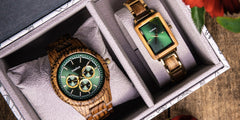
Across its quartz collection, you’ll find a range of designs, wood combinations, dial colors, and finishes for different tastes. The automatic collection brings its own variety, including distinctive dials, wood pairings, and designs that showcase mechanical watchmaking.
Together, the two collections cover a broad range of tastes. You can explore quartz designs or browse the best automatic watches for your style while choosing the materials and details you prefer.
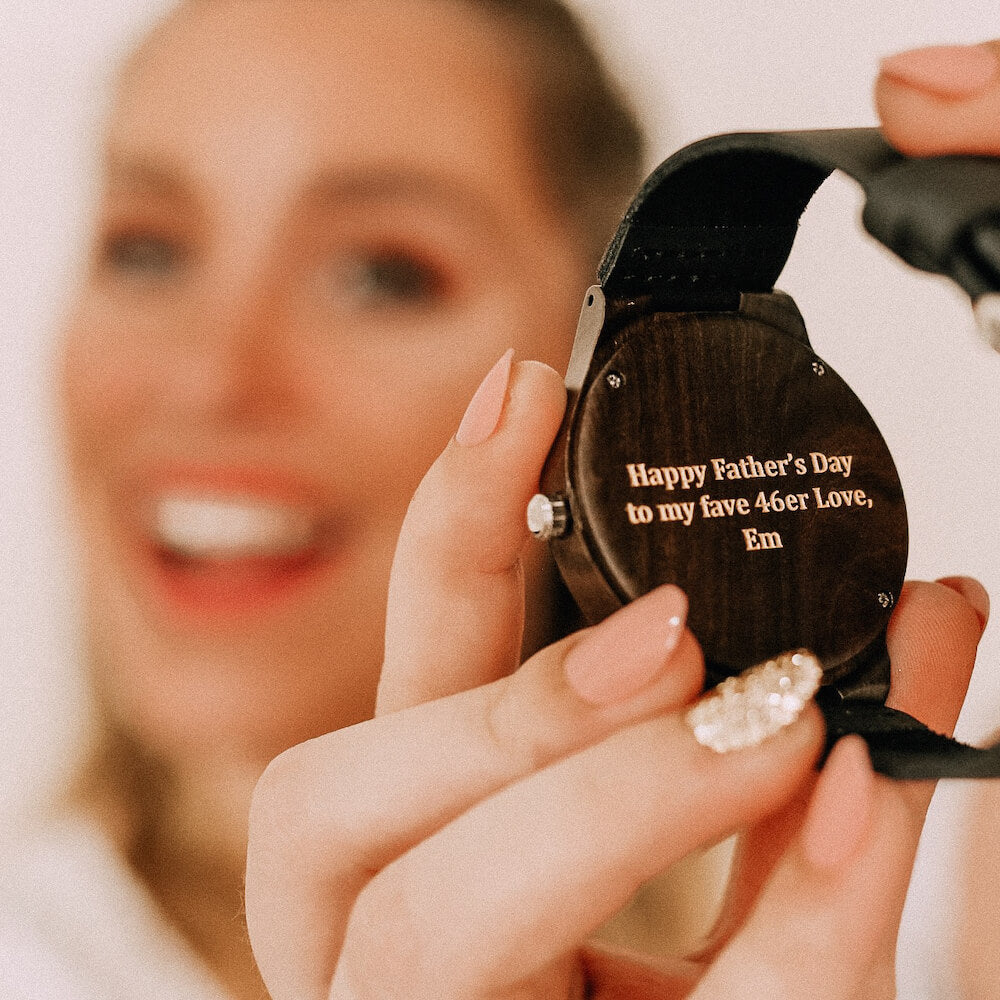
Personalization can make that choice even more meaningful. Add initials, a date, coordinates, or a short message to connect the watch to a person or memory.
That makes Treehut especially worth exploring when the watch is a gift. You can choose the movement and design around him, then add something that comes directly from you.
Frequently Asked Questions (FAQs)
-
Do automatic watches need batteries?
No, automatic watches do not need batteries. They use a mainspring to store mechanical energy, while a rotor helps wind the mainspring as your wrist moves. The mainspring gradually releases this stored energy to power the movement.
-
How long does a quartz watch battery last?
A quartz watch battery typically lasts two to three years, although battery life varies by movement and watch functions. Some quartz watches can run longer, so check the manufacturer's specifications for the expected battery life of a particular model.
-
Are quartz watches more accurate than automatic watches?
Yes, quartz watches are generally more accurate than automatic watches. Standard quartz movements typically vary by seconds per month, while automatic movements commonly vary by seconds per day. However, actual accuracy depends on the quality and condition of the movement.
-
Do automatic watches stop if you don’t wear them?
Yes, automatic watches can stop if you don't wear them. They continue running until the energy stored in the mainspring reaches the end of the movement's power reserve. The exact power reserve varies by watch and movement.
-
Can you manually wind an automatic watch?
Yes, many automatic watches can be manually wound by turning the crown. Manual winding adds energy to the mainspring and can restart a watch after its power reserve runs out. However, some automatic movements do not support manual winding, so check the manufacturer's instructions.
-
How long do automatic watches last?
A well-made automatic watch can last for decades with appropriate care and servicing. Because many mechanical movements can be serviced and repaired, their working life can extend across generations. However, longevity depends on movement quality, maintenance, use, and replacement-part availability.